
Language Learning
Languages open up new Worlds
Even though we live in a world where phones can translate content, AirPods can aid in conversations, and AI can accurately create documents in a completely different language, learning a language still makes sense. Why? Because emotions are expressed in more than just words. Emotions are expressed in poetry, with passion, and with deeper meanings.
Disappointment. Anger. Love. Disgust. Frustrations. All these things make language the path to and from people's hearts. And we express all these emotions in relationships.
When you learn a language, you open your mind to another human being's heart. If you move to another country, it becomes apparent that you must learn its language if you want to deepen your understanding of a culture. If you find yourself dating a person with another language background, you must learn the language to communicate on a deeper level.
Language is the official means of communication within a people group, But Emotions are expressed in more than Words.
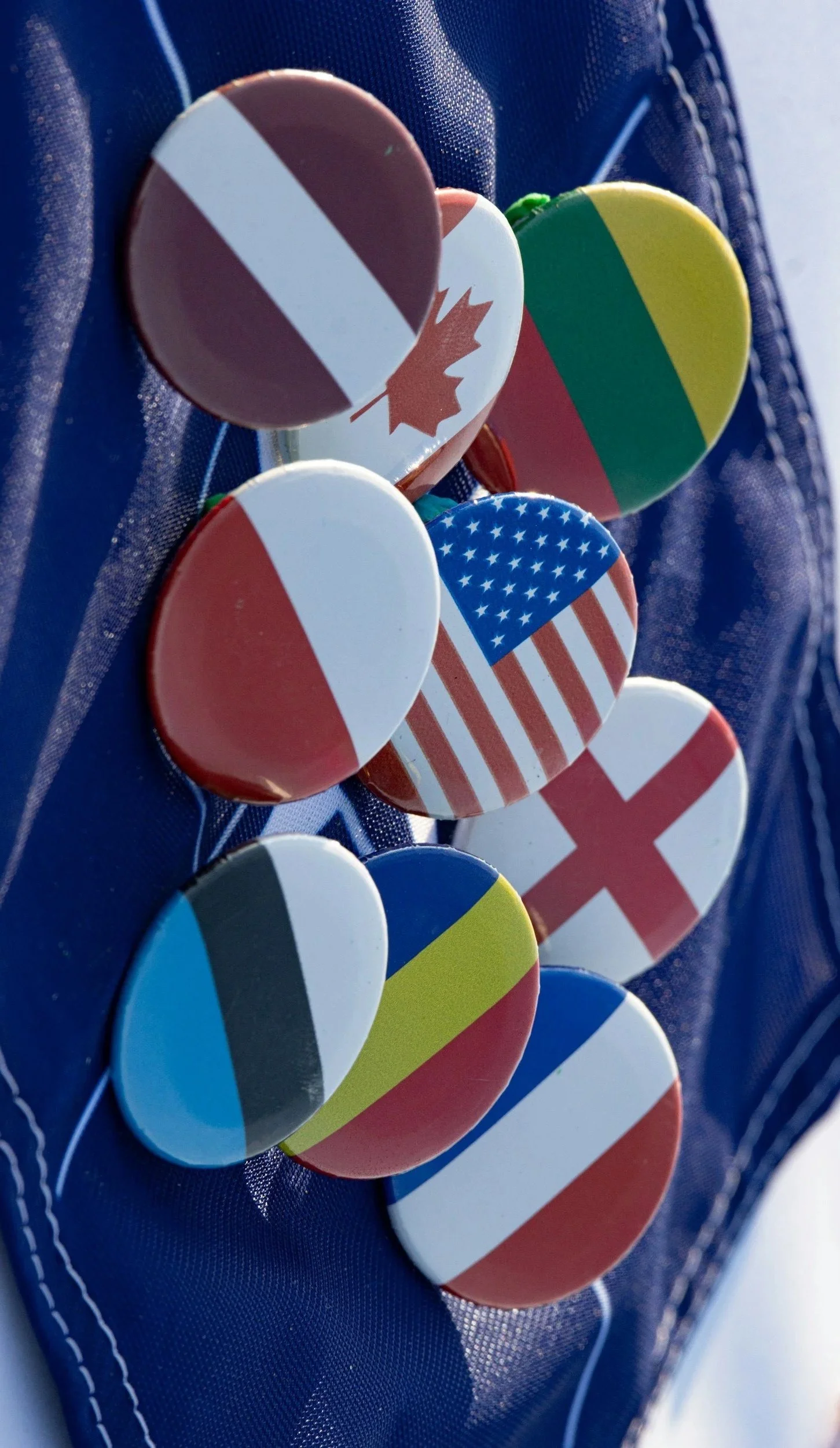
Look at these intriguing cases:
❋ Mündig This German word means more than being mature. It carries the notion of being apt to make decisions, being responsible enough to do so, and having permission to do so. But it’s different from simply being empowered.
❋ Kam'magarThis is a Yapese word for “Thank you”. But literally, it means “You made yourself tired for me.” Say it too many times, and you might start communicating, “You really shouldn’t have done that.”
❋ Ñaño or Ñaña These are the Quichua (native Latin American language) words for brother or sister. Ecuador’s official language is Spanish, and it is more than sufficient to speak only that. But if you drop the Quichua word into a conversation, you will see someone light up with excitement. Totally worth it.
❋ De pronto...In the Ecuadorian context, it most commonly means “maybe.” But use it with Mexicans, and they think you are rushing them. To their ears, it means “but hurry up.” You can see that, even within a language, there are nuances to be considered.

Culture is the framework of any Language
Useful Tips for Learning A Language
As a family, we have lived and worked as missionaries in three different countries. Learning languages within that kind of work was just a given. And while this sounds exciting, it came with its challenges. However, we have reached the point where we can communicate fluently and with full confidence in three languages, and Coach Dan has even started learning a fourth, just to see how it goes.
Here are a few tips and tricks we have learned along the way:
Having the right attitude is key
Motivation and attitude are two different things here. When I first met my wife, I was totally motivated to learn English. How else would I be able to ask for her hand, ask her to marry me, or get along with her? Believe me, I was absolutely motivated. - When I talk about attitude, I actually talk about wanting to learn the things connected to the language. There is a reason people say things in a certain way. There is a reason behind a word or a phrase. There might even be a story behind a saying. And while it might sound strange to you at first, with an open-minded attitude, you will learn to love the differences.
Check out this Video for more information: Attitude of Learning a Language
Start Small and Grow into it
Anyone who has observed a child learn a language knows that they rarely speak in full sentences right from the get-go. One starts with a single word. Then we connect words. Simple words at first. Little by little, we form sentences. And after a while we engage in full conversations. The same is true for listening. At the beginning, we catch a word here or there. And slowly we might get the meaning of a sentence. Then the paragraph. And then the whole conversation. From there, it is just a little step to understanding everything.
BUT … everything starts small. Be patient. Give it time. Be consistent. And don’t give up. While I learned Spanish in six to eight months, French has taken me two and a half years, and I am still in the phase where I only understand slow conversations. But hey, that was more than two years ago.
Here are a few tips for learning the language:
Learn the words by using the handwritten index card system. Write one word or a small phrase on one side of the card, the translation on the other side. Learn the words in stacks of 10-20 cards. If you get the words correct a few times in a row, put them to the side for “Level 2” words. Revisit this stack every 2-3 days. If you get them correct again a few times, move them to a “Level 3” stack. Once a week, review all these cards. And after a full week goes by, review the Level 3 stack. If at some point you don’t get it right, put the card back into the Level 1 stack.
Learn by listening to podcasts & music. Once you have learned around 500-1,000 words with the index card system, try listening to music or learner podcasts and catching those words in the songs/conversations. You will realize that some of the words reappear, and over time you will be able to make the connections. Revisit the same songs, podcasts, or even movies to dive deeper. Repetition is key here. Don’t expect full understaning yet. The goal is to cathc the meaning of a sentence.
Learn with interactive language apps or AI. For some time, Duolingo was the hype, and it still is an awesome app. But there are many more apps out there to try. Choose one that lets you have conversations with it. At the beginning, you might just share words, but slowly you will exchange sentences. While apps like Lerna AI and Jump are specifically designed for conversations, the main thing is to have a tutor or structured program to help you. I even started asking my prefered AI platform to be my language tutor for French. In this case I have AI give me feedback on my errors and suggestions for improvement. This works really well for learning to write small essays and train writing.
Get yourself exposed to native speakers. The best way to learn a language is still immersion in the people and culture of that language. I have yet to encounter a culture that does not appreciate when a foreigner is genuinely interested in learning their language. Speak to people. Go shopping. Go to the market. I had a friend who wanted to practice his English, and I wanted to learn Spanish. Just picture us jogging through the park; the Ecuadorian speaking in English and the gringo speaking in Spanish. And when I say “get yourself exposed”, I mean be open, make mistakes, laugh at yourself.
Find your personal approach to learning
One more thing: Everyone learns differently. My wife is a book learner. She needs the words in the book. The grammar. The sentence structure. Give her time with a book, and she will emerge from the books speaking a new language. Me, I need to talk with people. Don’t get me wrong. I need the words and the grammar too. In fact, I learned 3,000 Spanish words within the first two months using index cards. And I did have a tutor and some books. But the real learning happened for me in conversations with friends and in the marked place.
Respect that there are different learning styles. Find yours by trial and error. And once you find your way, stick with it.