

Practicing A Trinitarian Theology
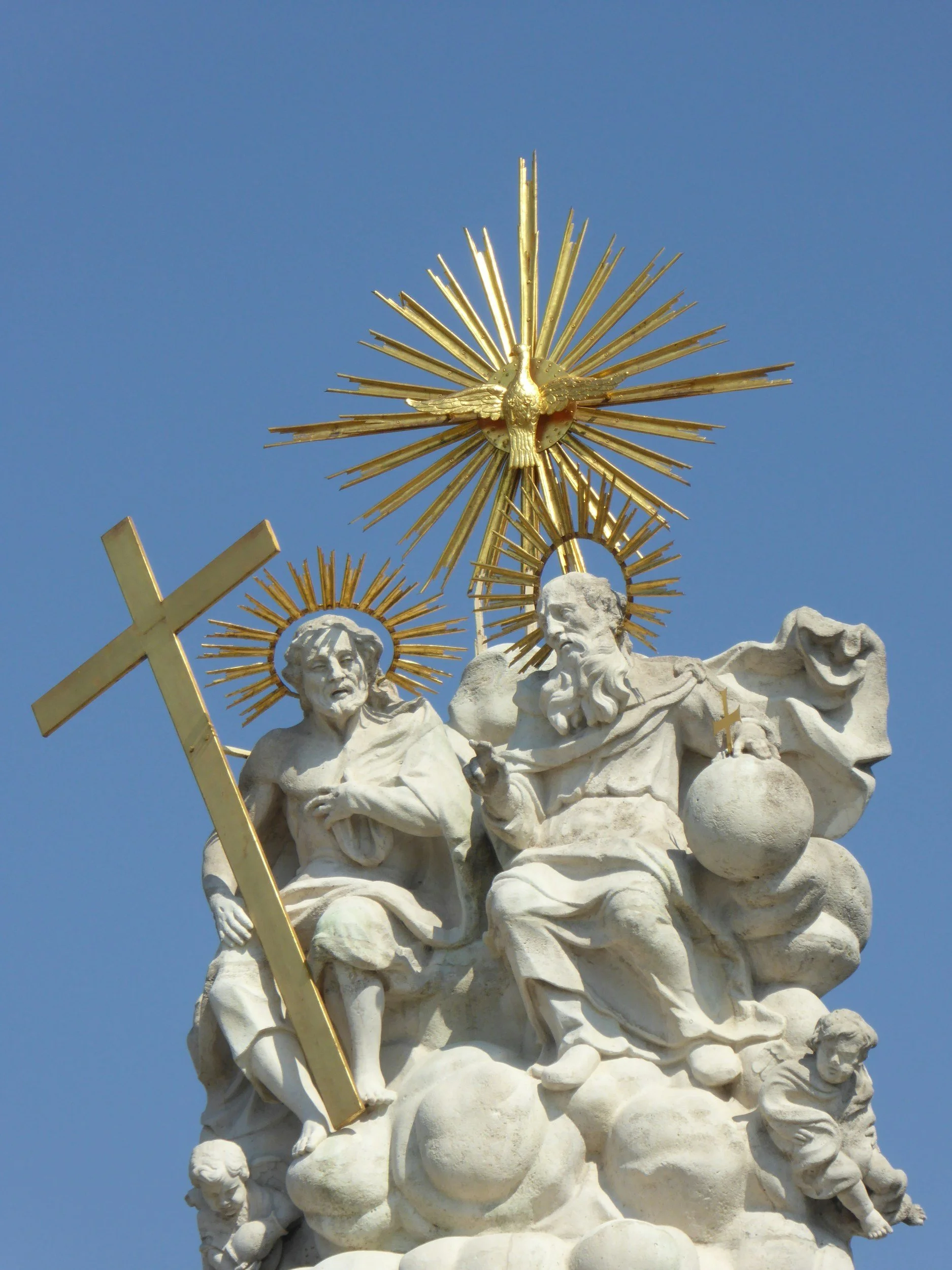
Granted, the Trinity is a complex theological issue. Many have tried to develop adequate imagery to explain the Trinity, but they usually fall short. Yet the Trinity is one of the central issues of Christian faith. Not knowing the basics of the Trinity will result in Christians working at a lower capacity than possible and will cast a shadow of confusion for non-Christians. An already difficult-to-understand God becomes a ridiculous concept that society rejects and tries to replace with logic and science, something that is easier to grasp and practice. Yet, in my opinion, a solid grasp of the Triune God can help every human -Christian or non-Christian- find a foundation for almost every area of life, if rightly understood.
God, the anchor of the Christian faith, reveals himself to human minds, enabling us to grasp at least a portion of who He is. Yet the concept is so vast that people often focus on only one aspect. Some admire creation and the authority behind this wonderful world, a superior being who stands above all. Others focus on the liberating teachings and work of Jesus, the Son, for humankind. Yet others strive to live by the power of the Holy Spirit, using spiritual gifts and seeking His personal guidance. However, we seldom find people focused on all three.
What is the Theological Basis for the Trinity?
Among the general public, questions about the Trinity are not so much an issue, since non-Christians usually ask about God in general or don’t ask about him at all. However, omitting any one person of the Trinity in theological discussions creates an environment that prevents Christians and churches from operating at full capacity. The result is haphazard Christianity and a limited testimony to the outside world. To address this partial omission, it is time to consider the theological significance of each person of the Trinity.
A. God, the Father
As the first person of the Trinity, the Father is the ultimate authority and plays the leading role within the Trinity (Anders, 1999). Notably, even Jesus acknowledges the Father’s authority and the hierarchical structure when he says, “All authority has been given to him” (Mt 28:18; Calvin, 2011). Jesus also recognizes that he is sent by the Father (Jn 20:21) and that, together with the Father, they will send the Holy Spirit (Jn 14:26). At the very end, when all things are subject to Jesus, “the Son will put himself under God’s authority” (1 Cor 15:28). Proper reverence for the Father’s authority is essential to understanding God and His created world.
The Father also plans and initiates all things, including creation and the plan of salvation (Anders, 1999). Through the Apostles’ Creed, the earliest church leaders proclaim Him as the maker of heaven and earth (Erickson, 2013). Yet He is not merely the architect of creation; He enjoys it and suffers with it. For example, when Jesus hung on the cross, the Father suffered the loss of His Son (Green et al., 2020). He is a loving Father (Grudem, 2020) who maintains constant contact with His Son, Jesus, and longs for a close relationship with all people (Jn 3:16). Yet many people, especially non-Christians, hold such a limited view of the Father that they reject Him and His love altogether. Anders (1999) argues that this view stems largely from a limited understanding of Jesus and the Holy Spirit, which may result from Christians’ failure to present Christ properly to the world.
B. God, the Son
Jesus, the Son, is by far the best-known and best-documented of the three. Four gospel writers record His life and teachings. Most importantly, Jesus is the Word of God in the flesh (Jn 1:1-18), who came to redeem people and give abundant life (Jn 10:10). While entire libraries could be filled with His works (Jn 21:25), His most important work is providing salvation through His death on the cross (Rom 5:8-10).
The most distinctive fact about Jesus is that He was born human without giving up His divinity (Anders, 1999), a concept that is not easily understood (Phil 2:6). Yet grasping this aspect of Jesus is key to understanding the power of salvation. Bonhoeffer separated Jesus' works from who He is (Green et al., 2020). However, doing so can tempt people to adopt a split view of Jesus, seeing one as the untouchable God and the other as someone who roamed the earth uncontrollably, trying to figure things out. A combined view, on the other hand, can help people understand the constant struggles of life in this fallen world. For example, Jesus was tested by many temptations, yet He did not sin; because of His divine nature, He did not let temptation get the better of Him (Grudem, 2020). For Christians and non-Christians alike, this means that there is a way out. Within God’s divine power, freedom from sin is possible.
C. God, the Holy Spirit
The Holy Spirit is probably the most mentioned by Christians but least known by non-Christians. In the non-Christian world, the Holy Spirit might easily be grouped with the spiritual realm of other religions or understood as a created entity like an angel or a demon (Erickson, 2013). Yet the Holy Spirit is as much part of the divine God as the Father and the Son (Anders, 1999). More importantly, the Holy Spirit enables us to understand God and His Word (Calvin, 2011). In light of this truth, Christians must make every effort to invite the Holy Spirit into conversations with non-Christians and trust that God’s Spirit will enlighten and convict them.
Beyond convicting people of God’s nature and their need for salvation, the Holy Spirit works with and in people (Jn 14:16; Anders, 1999). It is intriguing that Jesus calls the Holy Spirit a helper (gr. paraclete; Jn 14:16), yet the apostle John uses the same Greek word for Jesus’ work as an advocate (1 Jn 2:1; Elwell & Beitzel (1988)). While the Holy Spirit gives the power to heal (Mt 12:28; Erickson, 2013), the Holy Spirit’s power goes beyond mere miracles (Grudem, 2020). It is crucial that people know that each Christian is given a spiritual gift (Erickson, 2013) and empowered to be part of God’s work in this world. Non-Christians should be able to see God's work through the power of the Holy Spirit within the Christian community.
How does a diminished view of the Trinity affect the Church?
As mentioned at the beginning, Christians and non-Christians alike tend to focus on one or two persons of the Trinity but fail to pay attention to all three. The Catholic Church is known for emphasizing God's authority, stressing that church leadership has the authority to exercise God’s power on earth, and for omitting or even replacing Jesus’ advocacy with the Virgin Mary’s role as advocate. Evangelical denominations tend to omit the Holy Spirit’s existence and work, as seen when major events like Pentecost are not even mentioned in the church calendar. Additionally, Protestants in general seem to celebrate Jesus as the main authority, which creates the impression that every Christian has the authority to interpret the Word of God in their own way, as long as it aligns with Jesus’ main teachings. Third, Charismatics place so much emphasis on the Holy Spirit that Jesus’ work on the cross seems secondary, and the authority of the Bible is subject to the Spirit's revelation. By doing so, the hierarchy within the Trinity is reversed, and God the Father, as the ultimate authority, is misunderstood by Christians and non-Christians alike.
One could argue that by omitting any one person of the Trinity, the world receives only a partial picture of God and is left to interpret the rest for itself. This practice creates a gap in the biblical worldview that allows non-biblical elements to creep in and dilute the Will of God. Today’s society might have such a negative view of God simply because Christians can’t agree on a unified view of who God is, leading to rejection of God as a whole. Likewise, Christians are confused to the point that they create their own doctrinal statements, often adopting false teachings in their theological understanding.
Recommendation for Christian Leaders
Two practical recommendations for Christian leaders can help address this issue:
Teach Biblical Doctrine from the Pulpit
It is the declared task of a Christian leader to equip the church, build up the body of Christ, and lead them to such maturity that no Christian is “tossed to and fro by the waves and carried about by every wind of doctrine, by human cunning, by craftiness in deceitful schemes” (Eph 4:11-14). Paul also says that the Bible is God-given for “teaching, for reproof, for correction, and for training in righteousness, that the man of God may be complete, equipped for every good work” (2 Tim 2:16-17). Yet sermons have become a collection of repeated Gospel preaching, encouragement for emotional struggles, and occasional calls for Godly living. Granted, there are only 50 Sundays in a year for preaching, but even doctrine can be presented in an interesting and applicable way.
Apply the Trinity to Everyday Life
This leads to the last point. Max Anders (1999) divides his Christian Handbook into three parts: What we believe? Why we believe it? And how we should live then? As noted above, doctrine can speak directly into people’s lives. A proper understanding of the Triune God will inevitably lead to reverence for God and godly living. Understanding the nature of human beings will lead people to embrace God’s created design for identity, marriage, and family. Knowing the revealed details about the supernatural world will generate caution and confidence that take into account the power of God and the instructions in His Word.
Understanding the Trinity is just the beginning of a renewed Christian worldview that shapes Christians’ identity and way of life. To non-Christians, such knowledge and conviction might even be attractive and inviting.
References
Anders, M. (1999). New Christian’s Handbook. Thomas Nelson Publishers.
Calvin, J. (2011). Institutes of the Christian Religion (J. T. McNeill, Ed.; F. L. Battles, Trans.; Vols. 1 & 2). Westminster John Knox Press.
Erickson, M. J. (2013). Christian Theology (3rd ed.). Baker Academic.
Elwell, W. A., & Beitzel, B. J. (1988). Paraclete. In Baker Encyclopedia of the Bible (Vol. 2, p. 1614). Baker Book House.
The Holy Bible: English Standard Version. (2025). Crossway Bibles.
Green, G. L., Pardue, S. T., & Yeo, K. K. (Eds.). (2020). Majority World Theology: Christian Doctrine in Global Context. IVP Academic: An Imprint of InterVarsity Press.
Grudem, W. (2020).Systematic Theology: An Introduction to Biblical Doctrine(Second Edition). Zondervan Academic.
